Asterios Polyp by David Mazzucchelli is regarded as one of the greatest graphic novels of all time. It tells the story of Asterios, an esteemed architect, whose life fell apart after he and his wife divorce. Add in a journey of soul searching, Greek mythology, some philosophy, and you have a story with a lot to discuss.

One of the most striking parts of Asterios is the visual style though. Mazzucchelli is a gifted writer and artist, pushing what can be done in the comic format. In Asterios Polyp, Mazzucchelli does not use black, instead relying on darker shades of a colour as the outline. This is very unusual in comics where black is relied upon heavily to define shape and shadow.
Mazzucchelli has characters associated with certain colours. Asterios most notably is often drawn with blue. Hana on the other hand has a lot of pink. As their relationship blossoms, they start to wear each other’s colours more, shaping each other. However, when they argue, both return to their primary colours in the extreme, losing even the secondary colour.
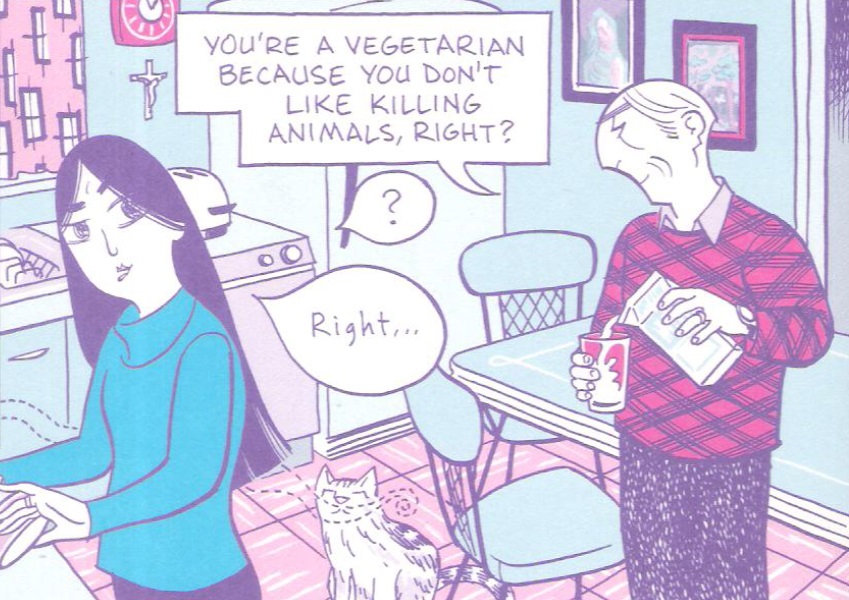
After the lightning strike on his apartment, Asterios loses this blue, for it to be replaced with yellow. Due to this, the palette can also be a good guide to where you are in the timeline of the story too.
The other most notable thing with the colouring is how limited the palette is, often only two colours used in a section. This is a really important part of understanding Asterios Polyp and it is worth taking note of how and where the number of colours change, as well as which colours are used.
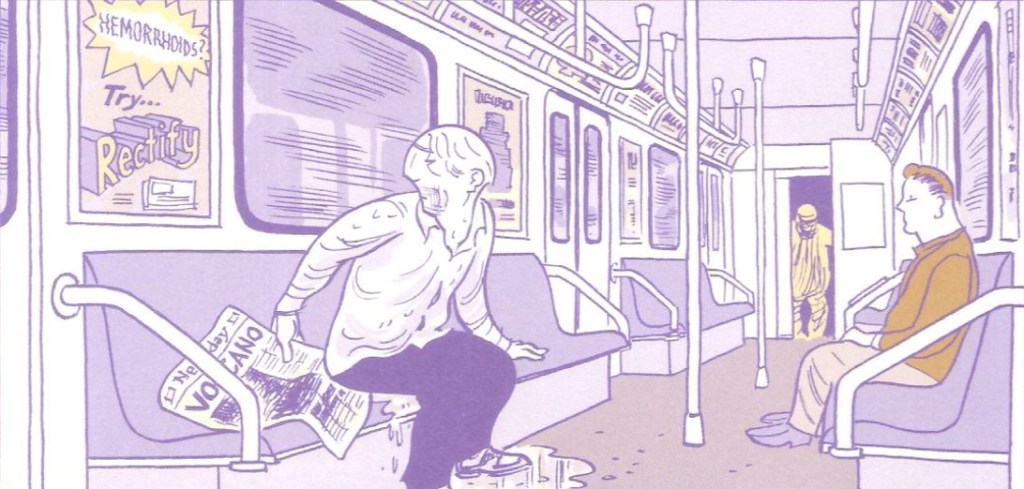
The parts of the story where there are only two colours used are before Asterios meets his Hana and after they divorce. At the height of their relationship and towards the end of the story, Mazzucchelli adds more colour to the panels. This is most apparent after Asterios murders his dead brother in a dream.
The reason for this is that Asterios’s worldview is dualistic; ideas, people, art etc. are one of two things. For example, good and evil would fit into this view, as would hot and cold. What Asterios does not understand is those grey areas or where ideas or feelings overlap; in other words a more pluralistic view of the world, something Hana has. Asterios’s black and white view of the world is the downfall of their relationship.
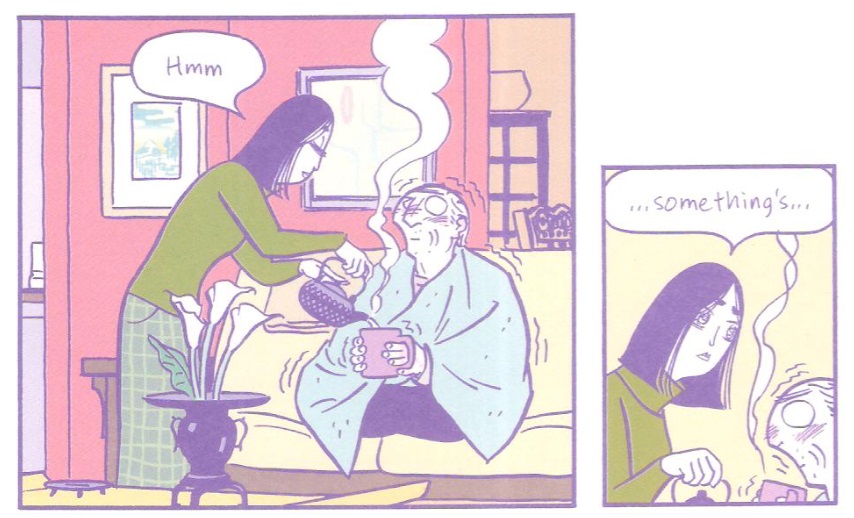
The number of colours used in the panels represents how Asterios is viewing the world. In his original outlook, only two colours are used. As he goes through his personal development, opening his mind to new ideas from the inhabitants of Apogee, he gains a new perspective, visualised by more colours used.
Buy Asterios Polyp [I earn a commission] – UK.Bookshop.org



 Key Comics Vault
Leave a comment